
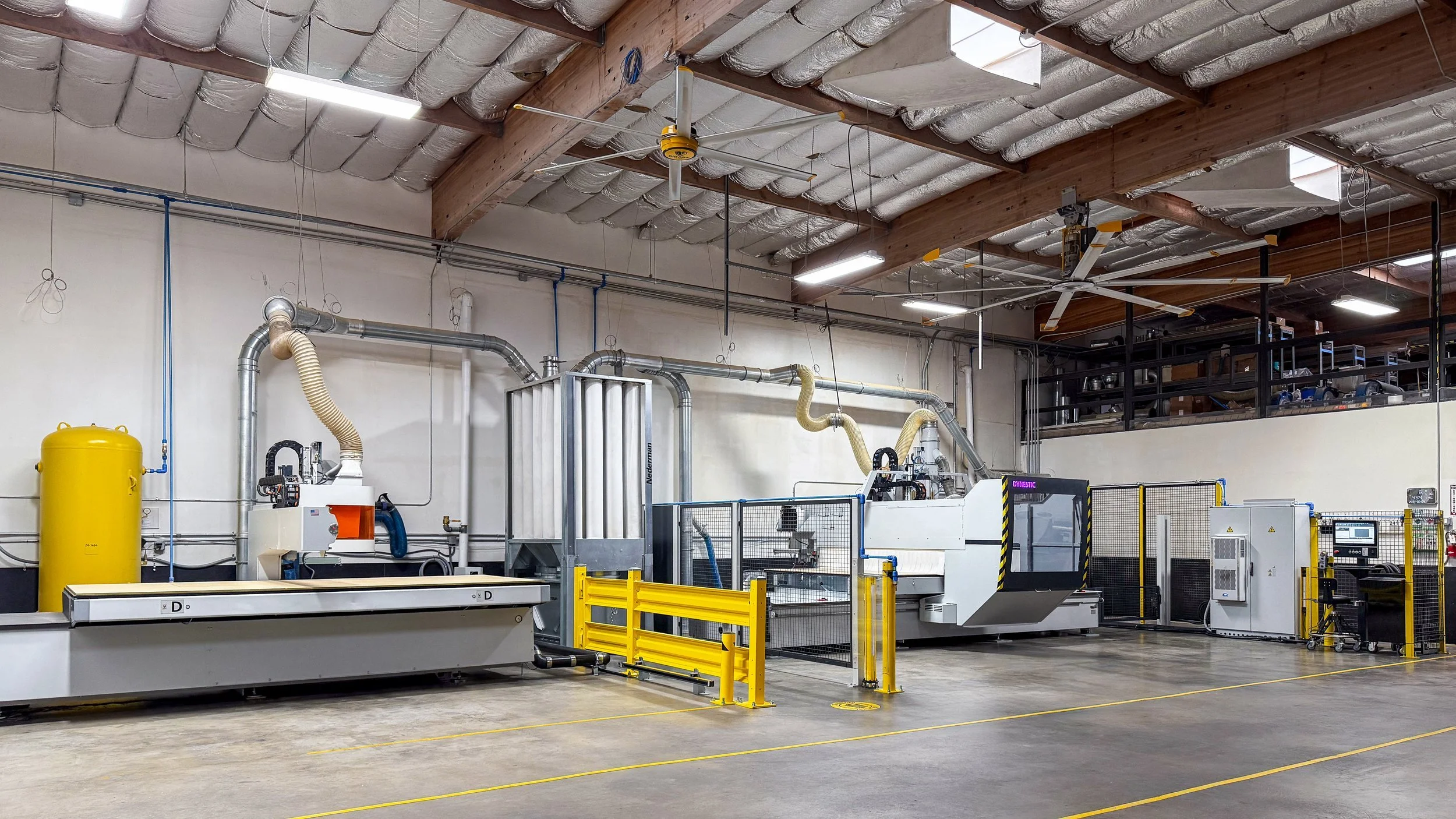
CNC Milling for Plastic Parts, Panels, and Precision Assemblies
Architectural Plastics, Inc. machines plastic parts, panels, and precision assemblies on 3-axis and 5-axis CNC routers with the speed, accuracy, and repeatability you need to hit deadlines and avoid rework. Nearly 50 years of plastics experience means we don’t just “cut to a file” we understand how acrylic, polycarbonate, HDPE, UHMW, PETG, and PVC behave during machining, fastening, bonding, and finishing, and we design the machining approach to prevent common failures like chipped edges, stress cracking, and tolerance stack-up issues. Our team uses modern CAD/CAM software, automated toolpaths, and state-of-the-art CNC machinery to deliver clean edge quality, tight feature control, and consistent repeat runs from prototype through production. We can process sheets up to 88" × 150" with typical tolerances in the ±0.010" to ±0.020" range (tighter by review), and we’re known for fast quoting, clear communication, and short lead times.
Quick CNC Milling Specs
Materials: Acrylic, polycarbonate, HDPE, UHMW, PETG, PVC, and more
Max sheet size: Up to 88" × 150"
Typical tolerances: ±0.010" to ±0.005"
Thickness range: 0.060" to 6.000" (depends on material and geometry)
Machines: 3-axis and 5-axis CNC routing
Features: Profiles, cutouts, pockets, hole patterns, countersinks/counterbores, bevels, chamfers, 3D surfaces
Volume: Prototypes to production runs
Quote speed: Same-day possible with complete files
Files: DXF, DWG, STEP, IGES, PDF (drawings), or send what you have
Fastest response: sales@archplastics.com. Email files for quick feasibility feedback.
CNC Milling Machines
We use 3-axis and 5-axis CNC machining depending on part geometry, tolerance sensitivity, and downstream fabrication requirements. The goal is consistent fit, clean edges, and repeatable results from prototype through production.
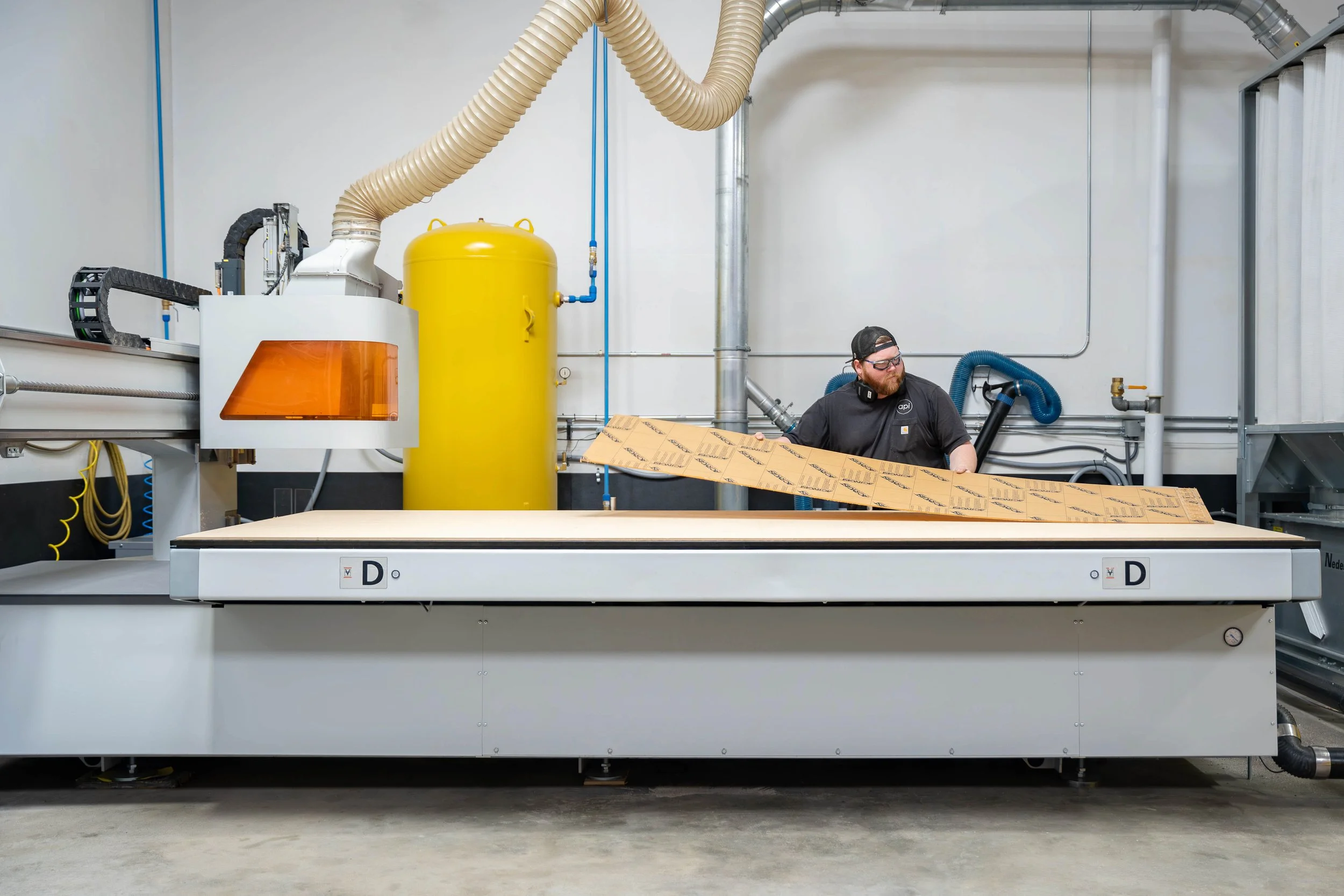
3-axis CNC milling with a 5′ × 12′ bed, built for flat panels, parts, and repeat production runs.
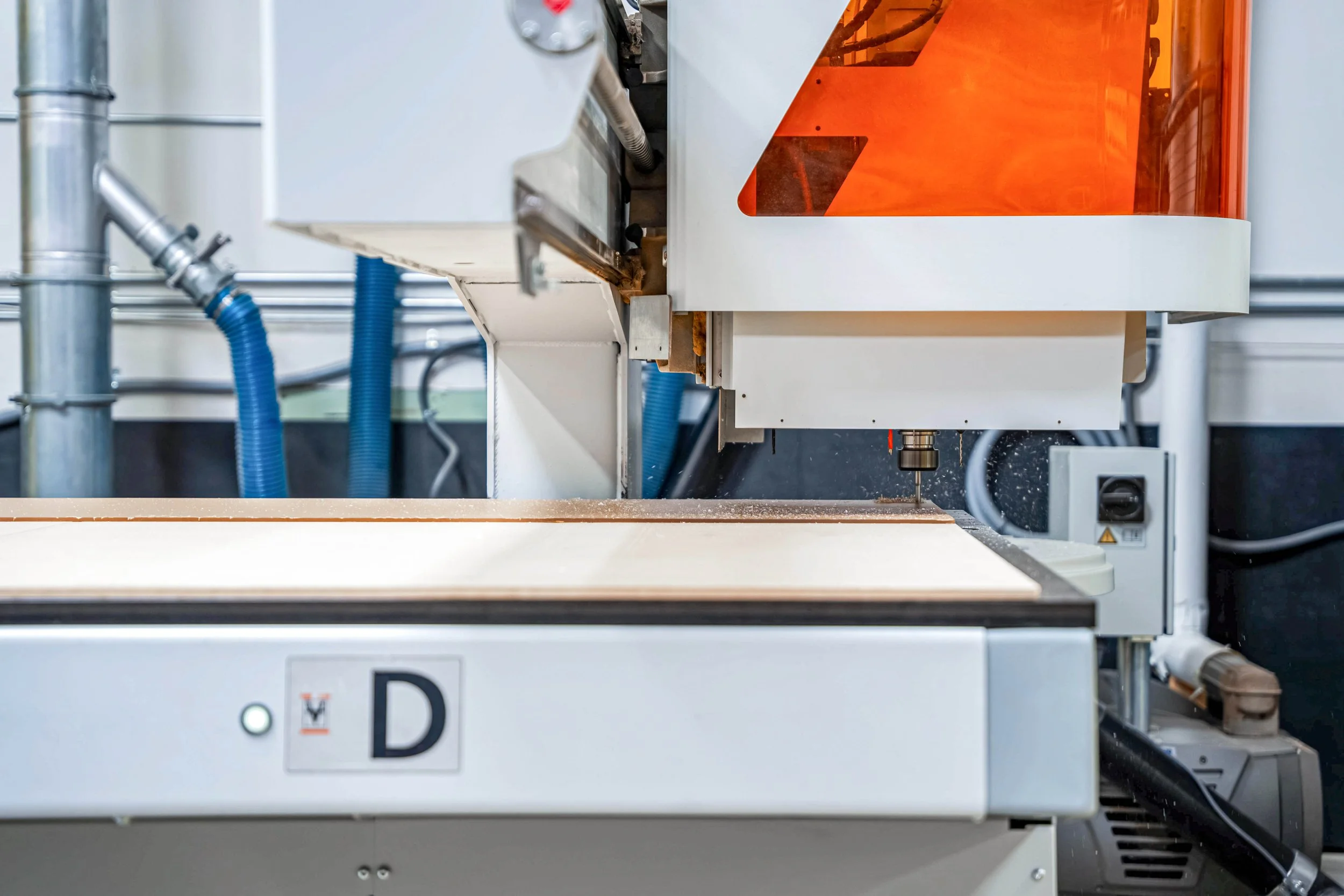
3-axis CNC milling in process, holding consistent tolerances and edge quality.
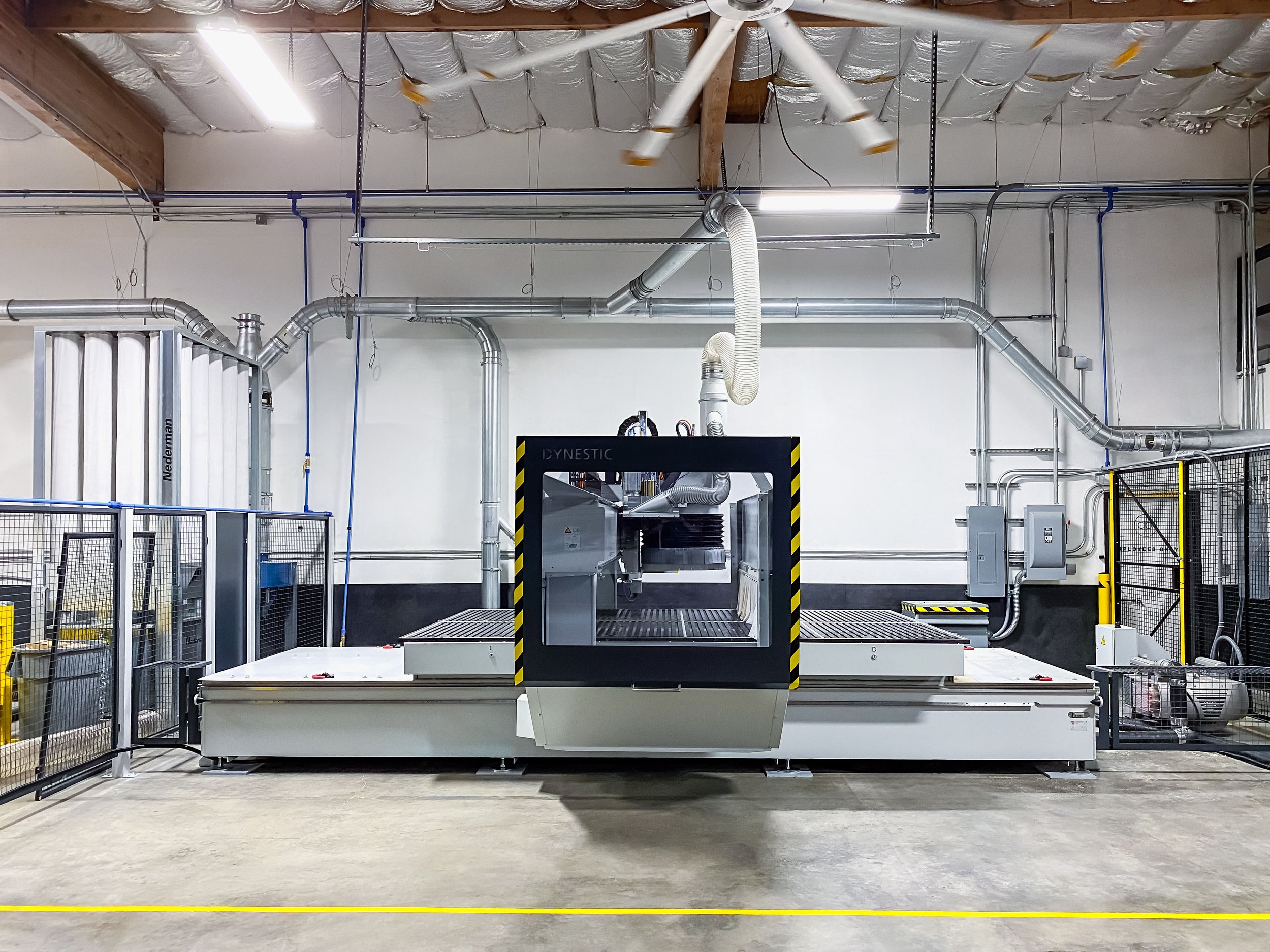
5-axis CNC milling with a 7′ × 12′ bed for complex geometry and multi-surface machining.
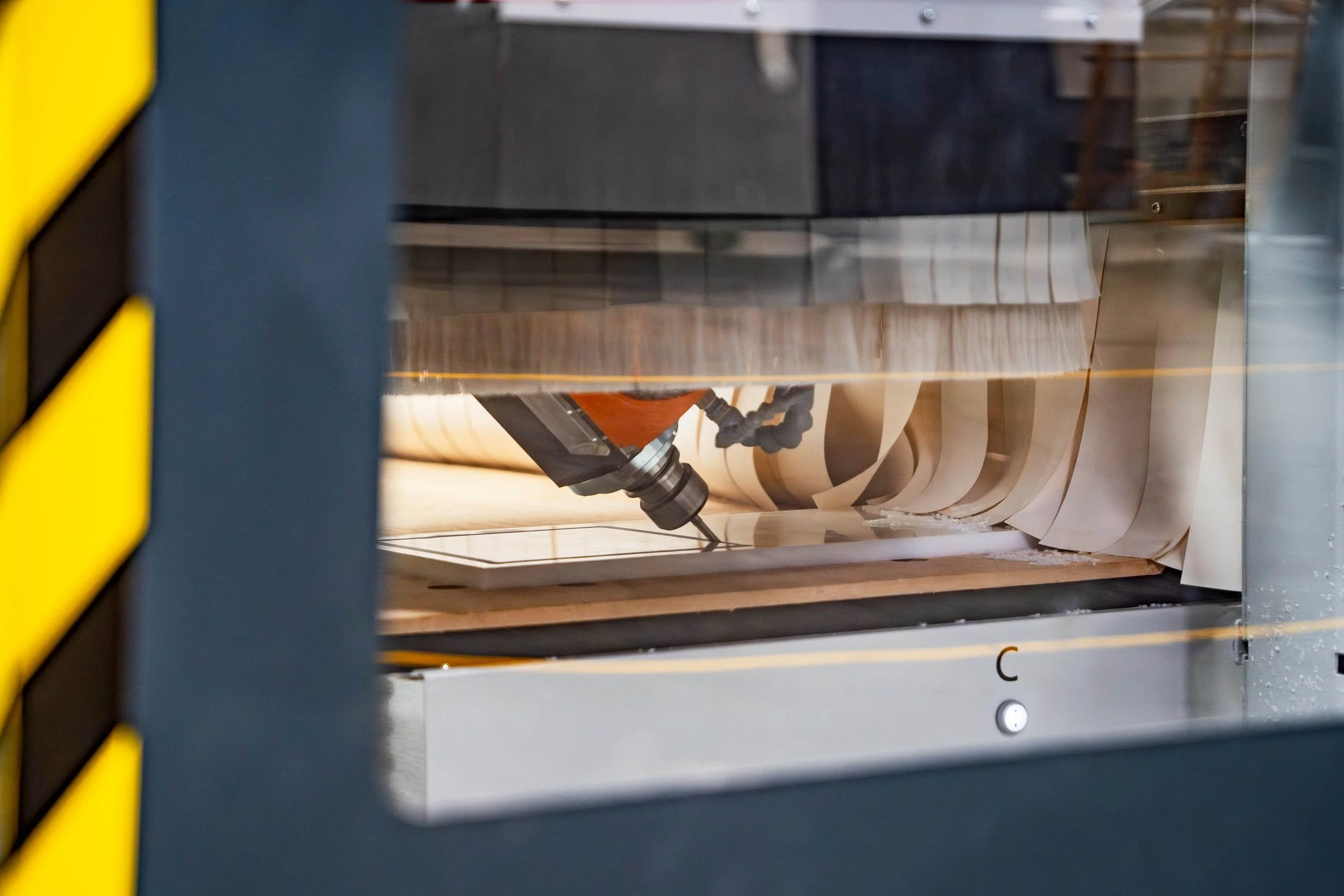
5-axis CNC milling at an angle, enabling complex profiles and features not possible on 3-axis machines.
Services Available From Our CNC Routing Department
Material Availability and Large-Format Sheets
We maintain a large in-stock inventory of acrylic sheet to support fast CNC turnaround and reduce delays tied to material sourcing. Our material handling and storage infrastructure allows us to machine standard sheet sizes as well as oversized acrylic sheets up to 88″ × 150″, supporting large panels and single-piece components that would otherwise require seams or secondary assembly.
Best for:
Architectural panels, oversized acrylic sheets, large CNC-cut components, seam avoidance.
You receive:
Fast access to in-stock material
Large-format sheet handling up to 88″ × 150″
Fewer delays tied to sourcing and lead times.
Automated Tool Changes and Multi-Operation CNC Programs
Our CNC programs are built to run multiple operations in a single setup. Automated tool changes allow us to switch between cutting tools, drill bits, and saw blades without stopping the machine or re-fixturing parts. This reduces handling, improves feature alignment, and supports tighter overall consistency—especially on complex parts and repeat production runs.
Best for:
Parts requiring routing plus drilling, multi-step machining, tolerance-sensitive features, repeat production.
You receive:
Multi-operation machining in one setup
Reduced run times
Reduced costs
What We CNC Mill
We CNC mill plastic parts, panels, and assemblies where dimensional accuracy, edge quality, and repeatability matter. This includes hole patterns, pockets, profiles, recesses, and alignment-critical features that must assemble cleanly.
Best for:
Plastic parts and panels, precision cutouts, hole patterns, prototypes and production runs.
You receive:
Repeatable machined geometry
Accurate patterns and cutouts
Parts that assemble without field modification.
3-Axis vs 5-Axis CNC Milling
We select 3-axis or 5-axis CNC machining based on part geometry, tolerance sensitivity, and downstream fabrication requirements. Using the correct machine reduces setups, improves feature alignment, and delivers more predictable results from prototype through production.
Best for:
Complex geometry, angled features, multi-surface machining, reduced setup requirements.
You receive:
Better feature alignment with fewer setups
Cleaner machining on complex geometry
Predictable repeatability of complex geometry
Edge Quality and Finishing Strategy
Machining is only half the result. Edge quality depends on geometry, tooling, feeds, and how the part will be seen and handled in real use. We plan edge expectations early so parts aren’t over-specified or under-finished.
Best for:
Customer-facing parts, high-visibility edges, polished or prepared edges, premium installs.
You receive:
Finish planning matched to visibility
Consistent edge quality across sets
Varied edge finishes per your needs
Quality Control and Repeatability
Repeatability is built into the process. We control fixturing, program consistency, and inspection so reorders match the original and assemblies fit as intended. This approach minimizes variation, rework, and surprises during downstream assembly or installation.
Best for:
Repeat orders, production runs, assemblies with alignment-critical features, consistency across batches.
You receive:
Stable programs for consistent reorders
Controlled fixturing to reduce variation
Inspection that supports repeatable fit.
Materials We CNC Mill
We CNC mill a wide range of plastics based on performance requirements such as clarity, impact resistance, wear, chemical exposure, temperature, and finish expectations. If you’re unsure on material selection, we’ll recommend an option based on the application and machining requirements.
Common Materials:
CNC Capability Specs
Typical CNC tolerance range: +/- 0.010” .
High-precision CNC tolerance range: Up to +/- 0.005” on qualifying features. Tolerance depends on material, geometry, and part size.
Max machined part size: Up to 88” x 150” depending on geometry and workholding.
Max sheet size handled: Up to 88” x 150” oversized acrylic sheets.
Thickness range: 0.060” to 6”
Typical prototype lead time: 1-2 weeks.
Typical production lead time: 2-4 weeks.
Pricing and Quote Factors
Pricing is driven by a few variables. Sharing these details up front helps us quote accurately and avoid change orders mid-build.
Material selection and thickness (clarity, impact, wear, chemical exposure, temperature).
Geometry and machining complexity (tolerances, hole patterns, pockets, recesses, multi-surface features).
Setup and workholding requirements (fixturing, repeatability, alignment-critical features).
Machine selection (3-axis vs 5-axis) based on geometry and feature access.
Edge expectations (as-machined vs edge-prep vs polished edges).
Quantity and repeatability (one-off prototype vs production run vs reorders).
Packaging and shipping requirements (finish-sensitive parts, crating, delivery constraints).
Timeline (standard vs expedited).
What to Send for a Fast CNC Quote
Send drawings, CAD, or sketches—PDFs are fine. Provide what you have and we’ll respond with clear next steps.
Include:
Material and thickness (or performance requirement)
Quantity (and expected reorders if applicable)
Tolerance sensitivity (critical features vs general)
Finish expectations (as-machined, edge-prep, polished, etc.)
Ship-to city/state and required timeline
FAQs
Do you do prototypes and production runs?
Yes. We support one-off prototypes, short runs, and repeat production work with consistent part programs.
What file formats do you accept?
Send what you have. PDF drawings are fine. CAD is welcome.
Can you hold tight tolerances in plastic?
Yes, up to +/- 0.005” on qualifying features, within material-appropriate limits. We confirm tolerance sensitivity during quoting.
Do you offer 5-axis CNC milling?
Yes. We use 5-axis machining for angled features, compound geometry, and details that are not practical with standard 3-axis routing.
Can you machine oversized acrylic sheets?
Yes. We can machine oversized acrylic sheets up to 88” x 150” to support large panels and single-piece components that would otherwise require seams or secondary assembly.
Can you machine clear acrylic without chipping?
Yes. Tooling and process selection are matched to geometry and edge expectations.
Do you polish CNC edges?
Yes. We can provide polished edges for presentation-grade finish when required. If only certain edges are visible, call that out and we will quote accordingly.
Can you drill hole patterns and add countersinks or counterbores?
Yes. We machine hole patterns, countersinks, and counterbores, including alignment-critical features that must assemble cleanly.
Do you provide complete fabrication builds beyond CNC machining?
Yes. If CNC milling is one step in a larger assembly, we can fabricate and deliver complete components and assemblies.
Ready to Move Forward?
If you need CNC-milled plastic parts that fit right the first time, with controlled tolerances and clean edges, this is where to start.
Already have drawings? Email them to us directly for the fastest response: sales@archplastics.com Phone: 707-765-9898